Thursday, June 18, 2015

THE FUTURE OF THE LEICA Q


The new Leica Q has hardly hit the market, and immediately we hear wishes for a zoom and even more so, interchangeable lenses.  I have stated in the past that I don’t like to participate in rumors, but please allow me to look into my crystal ball to see what the future of the Leica Q might bring.

As soon as the Leica M 240 was announced it became clear that Leica had finally a digital camera that could compete on all levels with anything the competition had to offer, that is with the exception of autofocus.  At that time I looked into my crystal ball as well, and I wrote that autofocus might be the next step.  But an M Leica with autofocus did seem to be quite a contradiction, after all, the M in the Leica cameras does stand for Messucher – rangefinder.  Why would a rangefinder camera need autofocus?

Back to the Leica Q.  It seems to be a more sensible design to offer interchangeable, autofocus lenses with a Leica M styled, full frame camera.  As it is now, the camera offers an excellent electronic viewfinder.  As the next step in its development we will most likely see the camera with a zoom lens and after that, hopefully, interchangeable lenses.

The most sensible step would be to equip the camera with the Leica M mount.  Immediately the entire line of Leica M lenses would be available.  With the electronic viewfinder, focusing would be no problem, although a different version with the addition of an electronic rangefinder would be even better.  With Leica R to M adapter, all of the Leica R lenses too would be a viable choice for that version of the Leica Q.

Leica Q with 50mm f/1.4 Summilux M and handgrip

Leica Q with R to M adapter and Leica R lens

The final step would be to take the optical design of the current (and future) Leica M lenses and replace the focusing mechanism, including the focusing cam, and replace them with an autofocus mount instead.  Electronic contacts between the lenses and the camera would most likely be used for the focusing information.

At that point Leica would have an answer for everybody.  For those who like the traditional rangefinder cameras and lenses, the Leica M would be the answer.  For those who like a compact, Leica M style camera the Leica Q would be the ideal instrument.  Even all the former Leica R owners who, for years, have been hoping for a digital replacement would now have an answer to their wishes.  The Leica M came close, but it does require the add-on electronic Visoflex to allow effective focusing.  That would be eliminated with the interchangeable, M mount Leica Q.


With the exception of the Leica S, the Leica M has always been the flagship of the company.  An M mount, autofocus Leica Q definitely would have what it takes to take that position in the Leica line of cameras.  Just as the introduction of the Leica M3 was a giant step forward for the company, so could be an advanced model of the Leica Q.


To comment or to read comments please scroll past the ads below.

-------------------------------------------------------------------------------------------------------------------------------------------

-----------------------------------------------------------------------------------------------------------------------------------------------------------------------------------------------------------------

For more information on KOMARU and for orders go to: www.taos-photographic.com
-----------------------------------------------------------------------------------------------------------------------------------------------------------------------------------------------------------------

For more information and pre orders go to: www.lenstab.com
--------------------------------------------------------------------------------------------------------------------------------------------------------------------------------------------------------------------------------------------------------------------------------------


Leica Akademie Chicago with Craig Semetko - August 2015


Upcoming shows in Tamarkin's Rangefinder Gallery

-----------------------------------------------------------------------------------------------------------------------------------------------------------------------------------------------------------------

Inventive Camera Bags for All of Your Gear
Receive a FREE CAMERA BAG from Think Tank Photo

-----------------------------------------------------------------------------------------------------------------------------------------------------------------------------------------------------------------

Click on image to enlarge
Please make payment via PayPal to GMP Photography

Click on image to enlarge
Please make payment via PayPal to GMP Photography


Click on image to enlarge
Please make payment via PayPal to GMP Photography


Monday, June 15, 2015

INFRARED PHOTOGRAPHY WITH THE LEICA M8, M9, ME AND M MONOCHROM


No digital camera makes it as easy as the Leica M8 to use infrared light to create surreal pictures that stand out in radiantly bright green leafs in extreme contrast of a dark sky, for example.  As is known, the barrier filter of the sensor cover glass is very weak for design-related reasons.  Therefore an additional blocking filter is always recommended for normal photography to avoid a magenta cast of skin tones or black textiles. The M9, ME and M monochrome are also ideal to create the effects of long light waves.
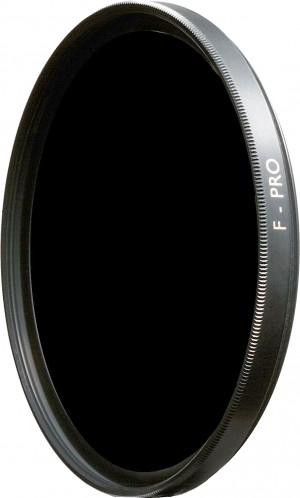
For this nothing more is necessary than an infrared filter like the B + W IR 093 Black Red 830 F PRO.  All B + W filters are made from high quality optically ground and finely polished, plane-parallel and streak-free glass.


The filter blocks out all visible light, resulting in pure infrared photographs.  Light transmission starts at a wavelength of 800 nm with just 1 percent and rises at 900 nm to 88 percent.
Since infrared filters have a very large exposure factor and therefore require long exposure times, it is always recommended to use a stable tripod.  Automatic exposure control should not be used because the exposure meter is calibrated for visible light only.  The optimum exposure values can best be determined through a series of tests. The distance settings require some practice as well.  As a rule of thumb for infinity focus under IR conditions multiply the focal length by 300.  For example, for a 50 mm lens that is 15 meters.

These filters are available in sizes E39, E46, E49, and E55.

For sample images go here


To comment or to read comments please scroll past the ads below.

-------------------------------------------------------------------------------------------------------------------------------------------

-----------------------------------------------------------------------------------------------------------------------------------------------------------------------------------------------------------------

For more information on KOMARU and for orders go to: www.taos-photographic.com
-----------------------------------------------------------------------------------------------------------------------------------------------------------------------------------------------------------------

For more information and pre orders go to: www.lenstab.com
--------------------------------------------------------------------------------------------------------------------------------------------------------------------------------------------------------------------------------------------------------------------------------------


Saturday June 20 is Leica Day at Tamarkin Camera !


Upcoming shows in Tamarkin's Rangefinder Gallery

-----------------------------------------------------------------------------------------------------------------------------------------------------------------------------------------------------------------

Inventive Camera Bags for All of Your Gear
Receive a FREE CAMERA BAG from Think Tank Photo

-----------------------------------------------------------------------------------------------------------------------------------------------------------------------------------------------------------------

Click on image to enlarge
Please make payment via PayPal to GMP Photography

Click on image to enlarge
Please make payment via PayPal to GMP Photography

Click on image to enlarge
Please make payment via PayPal to GMP Photography


Saturday, June 13, 2015

PHOTO BASEL


The annual art exhibition Art Basel for the first time is offering Photo Basel from June 16 to June 20.  This is the first exhibition in Switzerland which concentrates solely on international artistic photography.


This was preceded by the initiative of Leica Camera, who, in partnership with the Miami Street Photography Festival,  launched a series of exciting photographic events in partnership with Art Basel Miami in December 2013 .

On display will be classic and contemporary works of photography, showing the best galleries of the most promising young artists under 40.  In addition, temporary exhibitions and lectures will be offered which concentrate specifically on the artistic photography market.  Photo Basel is held at the Ackermannshof in Basel's Old Town, close to the Rhine with a few hundred square meters of usable exhibition space. The entrance fee for adults is 15 Swiss francs. Pupils, students, apprentices under 25 are admitted free.

To comment or to read comments please scroll past the ads below.

-------------------------------------------------------------------------------------------------------------------------------------------

-----------------------------------------------------------------------------------------------------------------------------------------------------------------------------------------------------------------

For more information on KOMARU and for orders go to: www.taos-photographic.com
-----------------------------------------------------------------------------------------------------------------------------------------------------------------------------------------------------------------

For more information and pre orders go to: www.lenstab.com
--------------------------------------------------------------------------------------------------------------------------------------------------------------------------------------------------------------------------------------------------------------------------------------


Saturday June 20 is Leica Day at Tamarkin Camera !


Upcoming shows in Tamarkin's Rangefinder Gallery

-----------------------------------------------------------------------------------------------------------------------------------------------------------------------------------------------------------------

Inventive Camera Bags for All of Your Gear

Receive a FREE CAMERA BAG from Think Tank Photo

-----------------------------------------------------------------------------------------------------------------------------------------------------------------------------------------------------------------

Click on image to enlarge
Please make payment via PayPal to GMP Photography

Click on image to enlarge
Please make payment via PayPal to GMP Photography


Click on image to enlarge
Please make payment via PayPal to GMP Photography


Friday, June 12, 2015

LEICA SCREW MOUNT NIKON AND OTHER NIKON LEICA COPIES


It is common knowledge that the modern 35mm system camera was developed in Germany by Leitz (Leica), soon followed by Zeiss with the Contax.  The influence of these two camera systems was far reaching and influenced many other camera manufacturers to develop similar cameras.

One such company was Nikon in Japan.  During the 1930s, the basis was laid for an independent photographic industry to meet civil and, more importantly, military needs that would become of primary importance following Pearl Harbor and Japan’s entrance into the second world war.

After the war, many of the Japanese camera manufacturers were eager to reenter the domestic and foreign markets.  Among all of the Japanese brands, the one that would soon become a household name in the US and Europe was Nikon.

But like so many other manufacturers, they began by closely copying successful German manufacturers, primarily Leitz and Zeiss.  Initially, Nikon manufactured only lenses, many of which were copies of lenses made by Leitz as well as Zeiss.

  
Nikkor QC 50mm f/3.5                                                     Leitz 50mm Elmar f/3.5


W-Nikkor.C 1:3.5 f=3.5cm in Leica M39 thread screw mount  
W-Nikkor C 35mm f/3.5                                                      Leitz Summaron 35mm f/3.5


               Optical design for W-Nikkor.C 1:3.5 f=3.5cm (35mm f/3.5) wideangle lens                                            
                                      W-Nikkor C 35mm f.3.5                                                         Leitz Elmar 35mm f/3.5


The first Nikon camera with interchangeable lenses appeared on the domestic market in March of 1948.  Unlike many other manufacturers who simply copied Leica cameras, Nikon, on the other hand, chose to copy the Zeiss Contax.  But there was more to the camera than what met the eye.  The camera body was clearly a copy of the Zeiss Contax, including the rangefinder and the lens mount.  But the shutter was definitely not a Zeiss design.  Upon closer inspection it was obvious that it was taken entirely from the Leica.  That decision apparently had been made because it was of a much less complicated design (thanks Oskar Barnack) and thus much more reliable than the vertically traveling, roller desk top type shutter of the Contax.  The Leica shutter was copied in virtually all details resulting in the Nikon being one of the very few cameras that utilized a collar type cable release.

 
Leica III

 
Nikon 1
Please note the position of the shutter speed dial, the shutter release, the film winding knob
and the film rewind lever.

Several years later, when it became apparent that rangefinder cameras would be replaced by single lens reflex (SLR) cameras, Nikon simply converted the Nikon rangefinder camera to an SLR by eliminating the rangefinder from the camera and adding a mirror housing.  Thus the original Nikon F was born.  It too featured the Leica shutter, virtually unchanged.  The Nikon F soon became one of the most successful, professional SLRs on the market and Leica technology was a definite part of that.

   
Leica III                                                                             Nikon F SLR

Using the Leica shutter offered another, little known feature, mostly unknown to even Leica users.  The Leica shutter used by Nikon was that of the Leica screw mount cameras and it made those Leicas, the Nikon rangefinder and Nikon F SLRs the only cameras to ever incorporate that feature.

It was the ability to allow double exposure with perfect registration, but not just simple double exposures on the last frame but with any frame that had been exposed on the roll of film.

Users of these cameras might have noticed that the shutter release button turns when rewinding the film.  To make a double exposure on the last exposed frame all that is necessary is to activate the rewind release and winding the film back for one full revolution of the shutter release button and then go beyond that for not quite another half revolution.  After that the camera has to be switched back to the film advance mode and the film transport knob or advance lever moved to cock the shutter.  This will also advance the film which will automatically stop with perfect registration on the last exposed frame.  At this point the second exposure can be taken on that frame.  Repeating the above steps will allow unlimited exposures on the same frame.

To take additional exposures on any previous frame one needs to do the same procedure as above.  Except rather than winding the film back just one revolution of the shutter release knob, one needs to make it do as many revolutions as the number of frames the one is back that is to receive the additional exposure.  Don’t forget to go about one half revolution beyond, activate the advance until it stops and take the exposure.

To go back to taking a new picture, block any light from entering the lens and take as many ‘blind’ exposures as the number of frames you wound back.

This might require some practice.  To do that with any accuracy, take an old, unexposed or undeveloped roll of film and load it into the camera.  With the camera set on ‘B’ and with the lens removed, take several frames and mark the outline with a pen and number the frames consecutively.  This will allow you to practice the above procedure with any number of frames.

A fact only known to few is the fact that Nikon also considered to use the Leica screw mount on their early cameras instead of the Contax mount.  However, this did not proceed beyond the prototype stages and all of the Nikon rangefinder camera that reached the market did feature the Contax mount.

 
Leica Screw Mount Prototype #1
Very closely based on the Contax, but definitely shows the use
of the Leica shutter

 
Leica Screw Mount Prototype #2
VEry closely based on the Contax, including the self timer lever,
featuring the Leica shutter

 
Leica Screw Mount Prototype #3
Close to the later Nikon rangefinder lay-out, Leica shutter

 
Leica Screw Mount Prototype #4
Very close to the marketed Nikon rangefinder with Leica shutter

Besides copying lenses and cameras, Nikon’s line of accessories also consisted of quite a variety of copies of Leica accessories.

Rangefinder cameras by their very nature are limited in their ability to do close up photography as well as photography with lenses longer than 135mm.  To overcome that problem, Leica developed a single lens reflex viewing attachment.  When added to the camera, it allowed viewing through the lens, allowing to focus accurately when doing close ups as well as when using long lenses.  The first in the line of the reflex viewing attachments was the PLOOT.  Later versions became known as the Visoflex.  Nikon too offered such an attachment and the similarity to the Leica version is undeniable.

 
Nikon reflex focusing unit

 
Leitz PLOOT

After the first Leica appeared on the market in 1925, models with interchangeable lenses were soon to follow.  Since the viewfinder of those cameras only showed the field of view of the 50 mm lens, accessory viewfinders for the other focal length lenses became a necessity.  This resulted in the Vidom, a universal viewfinder that could be adjusted to show the field of view of focal lengths from 35 mm to 135 mm.  Nikon, faced with the same problem, simply copied the design of the Vidom rather than developing a viewfinder of their own design.

           
 Nikon Optical Finders - LINK   
                                                Nikkor Multi Focal Finder                               Leitz Vidom

Stereo photography was quite popular for a while and Leitz made a variety of accessories that allowed to take stereo photographs and again, Nikon simply copied these designs for their own use.

The Nikon Stereo-Nikkor 35mm f/3.5 outfit consisted of a stereo lens and stereo prism for the Nikon rangefinder cameras.  Introduced in 1956, it bears more than a close resemblance to the Leitz Stereoly, first introduced in 1931 and later replaced by an improved model in 1954.


Nikon Stereo Nikkor 35mm f/3.5

File:B11.JPG
Patent drawing of Leitz Stereoly attachment

Image of Leica 11
Leitz Stereoly on early Leica II

 
Leitz Stemar 35mm f/3.5

In either case, this stereo equipment produced two half frame stereo images in place of the standard 35mm frame.  Stereo viewers and projector accessories allowed for stereo viewing of the images taken.


Thus we have another example of the influence Leica has had on Nikon over the years. This isn't to say that NIkon could not have been successful without Leica, but copying Leica cameras, lenses and accessories definitely eliminated a lot of development time for them. Considering how many other manufacturers copied Leica, Leica cameras, lenses and accessories remain the most copied photographic equipment in history.


To comment or to read comments please scroll past the ads below.

-------------------------------------------------------------------------------------------------------------------------------------------

-----------------------------------------------------------------------------------------------------------------------------------------------------------------------------------------------------------------

For more information on KOMARU and for orders go to: www.taos-photographic.com
-----------------------------------------------------------------------------------------------------------------------------------------------------------------------------------------------------------------

For more information and pre orders go to: www.lenstab.com
--------------------------------------------------------------------------------------------------------------------------------------------------------------------------------------------------------------------------------------------------------------------------------------


Saturday June 20 is Leica Day at Tamarkin Camera !


Upcoming shows in Tamarkin's Rangefinder Gallery

-----------------------------------------------------------------------------------------------------------------------------------------------------------------------------------------------------------------

Inventive Camera Bags for All of Your Gear

Receive a FREE CAMERA BAG from Think Tank Photo

-----------------------------------------------------------------------------------------------------------------------------------------------------------------------------------------------------------------

Click on image to enlarge
Please make payment via PayPal to GMP Photography

Click on image to enlarge
Please make payment via PayPal to GMP Photography


Click on image to enlarge
Please make payment via PayPal to GMP Photography