
A while ago I got into a
discussion with a colleague about digital photography and Photoshop on the
internet. He still prefers to use film
and argued that all pictures should be shown “the way the camera saw them, the
way they come out of the camera” and he went on to say that Photoshop should
not be used.
I definitely disagree with
that and answered:
“Why? Digital photography and Photoshop have
considerably lowered my overhead (no film to buy, no processing costs) and I
have full control over the final looks of my images instead of having to rely
on some lab’s idea about what my images should look like. Film is a thing of the past. Just because Photoshop is available doesn't
mean that the photographer doesn’t need the same skills as in the film days. Composition, lighting etc. are still as
important as ever. Shooting digital is
essentially nothing more than using a different means to record the image. The addition of Photoshop has enabled us to
control the final outcome of our photographs to a greater degree than ever
before which, when used correctly, will ultimately deliver the best quality
images possible.”
He answered:
“However, when you change
that image to some other image, then it is a second image. I know what you are saying above but I also
know that you change some of your images to make them into something
else.....and so do others. I just happen
to think that the original image is what the end result should be.”
I answered:
“I understand what you are
saying. However, just because Photoshop
has the ability to substantially alter an original image doesn’t mean that its
use will always lead to that. Photoshop
offers the ability to ‘tweak’ our photographs to ultimately end up with better
results. We have the ability to alter
contrast and color saturation, both of which are much easier to do with
Photoshop than during the film days. In
the past photographers routinely retouched their photographs to reduce
blemishes, for instance. Photographers
used changes in exposure and development to reduce or increase contrast. Are these accepted methods really any
different than using Photoshop to obtain the same results? Isn’t either approach effectively altering
the image from what the camera saw?
Then, of course, there is the question of what the ultimate purpose of
taking a photograph is. Isn’t the final
image, as envisioned by the photographer, what counts? In the past we used methods like
solarization, for instance. That
certainly is a considerable departure from what the initial photograph looked
like, the same goes for posterization or bas relief images, all of which were
routinely used to create photographic art beyond the original image as it came
out of the camera. If those methods were
okay in the past, then why isn’t the use of Photoshop acceptable as a means to
create pieces of art derived from otherwise ordinary photographs? Even simple cropping is altering an image
beyond what originally came out of the camera.
Since none of us is perfect, we naturally get often useless photographs
because of a variety of reasons. In many
cases Photoshop has enabled me to save such photographs with the help of Photoshop. I see that as a benefit”.
I have come across similar
opinions fairly often and I wonder if it is really a conviction or if it is
more a resistance to change, combined with an underlying fear of learning a new
method of working with our photographs.
To which extend Photoshop or
similar programs are going to be used is ultimately a personal preference. However, it is a tool that should not be
rejected off hand. If we are honest
about our own work, most of us probably reject or throw away more of our
photographs than we save and with digital photography that ratio has most likely
increased. But with Photoshop we also
have the possibility to save an otherwise useless picture and make it into
something worth keeping.

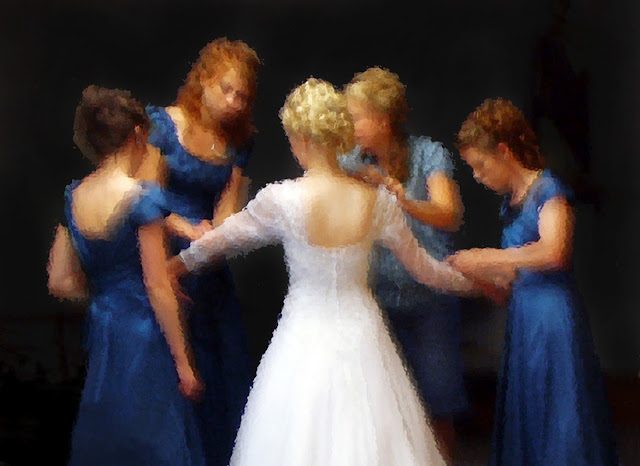
This is a picture my wife took at a wedding. The original was nothing special and it was almost deleted. However, after taking a closer look, she asked me to apply my Photoshop skills. I tightly cropped the group to remove as much as possible of the clutter in the room which was further eliminated with various Photoshop tools. I then modified the image to give it a painting like appearance. The final result certainly is not at all what came out of the camera, but it is a photograph worth keeping. As it turned out, it is one of the favorites of the bride.
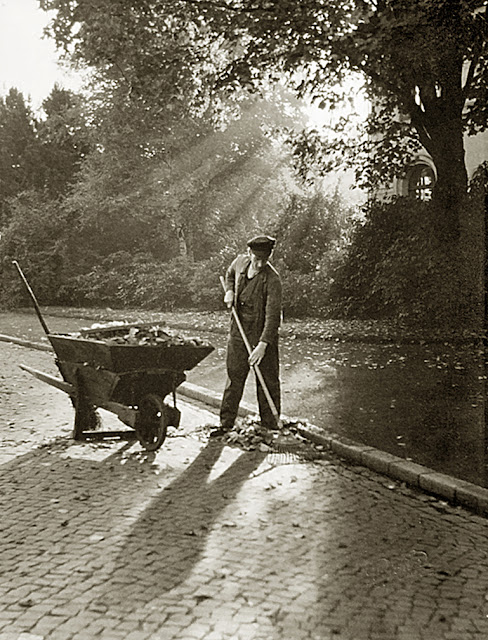
This photograph was taken by
my father in Hamburg in 1949. He
enhanced the sunrays in the background by carefully applying graphite dust to
the rays on the negative to lighten them in the final enlargement and thus make
them stand out more.
Two photographs, both
manipulated to allow for a better end-result; photographs that would have less
impact, which would be visually less pleasing had they not been enhanced. There should be no question that Photoshop or
conventional retouching are means that enable us to make our photographs better
than what our cameras are capable of doing by themselves. I consider that something very worthwhile.
------------------------------------------------------------------------------------------------------------------------------------------
For high quality camera bags and accessories worthy of Leica equipment, go to


