By Heinz Richter
No other camera has ever been copied as much and as often as the Leica. As a matter of fact, several well know camera manufacturers of today started out by copying Leica cameras. The majority of these copies originated in Japan, but Leica copies were also made in the Soviet Union, Great Britain, China and the United States.
It is not the purpose of this article to list and describe every Leica copy ever made, but I hope to give a general account of how pervasive the business of copying Leicas has been.
Probably the best known company to get its start by making copies of the Leica is Canon. The company was founded in 1933. Their first camera was called Kwanon, a name that later evolved to Canon. At that time, Canon had not yet the capability to manufacture lenses. They came from a different manufacturer. The original Kwanon lens was a copy of the Leitz Elmar 50mm f/3.5 lens. Later lenses were supplied to Canon by Nippon Kogaku, better known as Nikon.
The original Kwanon from 1933, a copy of the Leica II
Canon IIB, a further development, incorporating features of newer Leica cameras
Comparison of Canon IIB with Leica IIIc
Other, lesser known Japanese made Leica copies were, (in alphabetiocal order) the Chiyoca from 1950 and the Honor from 1954. It is ironic that a blatant copy of a Leica would receive the Honor label. Another prewar example is the Leotax from 1938, made by the Leotax Camera Company, the second oldest Japanese company to make copies of Leica screw mount cameras. The Melcon, made by Meguro Kogaku Co. Ltd. Was another post war camera which was first made in 1954.
Chiyoca 1950
Honor 1954
Leotax 1938
Melcon 1954
At this point of the alphabetical order, the name of another well known Japanese camera manufacturers appears on the List, Minolta. Minolta was founded in Osaka, Japan, in 1928 as Nichi-Doku Shashinki Shōten, ironically meaning Japanese-German camera shop. It was not until 1933 that the brand name appeared on a camera, a copy of the Plaubel Makina, another German camera. The first Leica copy didn’t appear until 1947 as the Minolta 35. Today Minolta has been absorbed by Sony.
Minolte 35B
The first Nikon camera with interchangeable lenses appeared on the domestic market in March of 1948. Unlike many other manufacturers who simply copied Leica cameras, Nikon chose to copy the Zeiss Contax. But there was more to the camera than what met the eye. The camera body was clearly a copy of the Zeiss Contax, including the rangefinder and the lens mount. But the shutter was definitely not a Zeiss design. Upon closer inspection it was obvious that it was taken entirely from the Leica. That decision apparently had been made because it was of a much less complicated design (thanks Oskar Barnack) and thus much more reliable than the vertically traveling, roller desk top type shutter of the Contax. The Leica shutter was copied in virtually all details resulting in the Nikon being one of the very few cameras that utilized a collar type cable release.
Leica III
Nikon 1
Please note the position of the shutter speed dial, the shutter release, the film winding knob
and the film rewind lever.
Several years later, when it became apparent that rangefinder cameras would be replaced by single lens reflex (SLR) cameras, Nikon simply converted the Nikon rangefinder camera to an SLR by eliminating the rangefinder from the camera and adding a mirror housing. Thus the original Nikon F was born. It too featured the Leica shutter, virtually unchanged. The Nikon F soon became one of the most successful, professional SLRs on the market and Leica technology was a definite part of that.
Leica III Nikon F SLR
Using the Leica shutter offered another, little known feature, mostly unknown to even Leica users. The Leica shutter used by Nikon was that of the Leica screw mount cameras and it made those Leicas, the Nikon rangefinder and Nikon F SLRs the only cameras to ever incorporate that feature.
It was the ability to allow double exposure with perfect registration, but not just simple double exposures on the last frame but with any frame that had been exposed on the roll of film.
Users of these cameras might have noticed that the shutter release button turns when rewinding the film. To make a double exposure on the last exposed frame all that is necessary is to activate the rewind release and winding the film back for one full revolution of the shutter release button and then go beyond that for not quite another half revolution. After that the camera has to be switched back to the film advance mode and the film transport knob or advance lever moved to cock the shutter. This will also advance the film which will automatically stop with perfect registration on the last exposed frame. At this point the second exposure can be taken on that frame. Repeating the above steps will allow unlimited exposures on the same frame.
To take additional exposures on any previous frame one needs to do the same procedure as above. Except rather than winding the film back just one revolution of the shutter release knob, one needs to make it do as many revolutions as the number of frames the one is back that is to receive the additional exposure. Don’t forget to go about one half revolution beyond, activate the advance until it stops and take the exposure.
To go back to taking a new picture, block any light from entering the lens and take as many ‘blind’ exposures as the number of frames you wound back.
This might require some practice. To do that with any accuracy, take an old, unexposed or undeveloped roll of film and load it into the camera. With the camera set on ‘B’ and with the lens removed, take several frames and mark the outline with a pen and number the frames consecutively. This will allow you to practice the above procedure with any number of frames.
A fact only known to few is the fact that Nikon also considered to use the Leica screw mount on their early cameras instead of the Contax mount. However, this did not proceed beyond the prototype stages and all of the Nikon rangefinder camera that reached the market did feature the Contax mount.
Leica Screw Mount Prototype #1
Very closely based on the Contax, but definitely shows the use
of the Leica shutter
Leica Screw Mount Prototype #2
Very closely based on the Contax, including the self timer lever,
featuring the Leica shutter
Leica Screw Mount Prototype #3
Close to the later Nikon rangefinder lay-out, Leica shutter
Leica Screw Mount Prototype #4
Very close to the marketed Nikon rangefinder with Leica shutter
A 5th prototype with Leica screw mount was revently sold by Wetzlar Camera Auctions (WCA).
Just like the other prototypes, this too clearly made use of the Leica shutter
The Nicca Camera Co. Ltd. started as the optical workshop Kōgaku Seiki Co. in 1940, founded by former employees of Canon. Its first camera, the Nippon, a close copy of the Leica rangefinder camera, was produced in 1942. Nicca also made cameras under the Peerless name and for Sears under the Tower name.
Peerless Nicca
Tower
Tanaka Kōgaku K.K. was based in Kawasaki, Kanagawa (a distant suburb of Tokyo). The company started to work on a Leica copy called Tanack 35 in 1952, and released the camera in 1953. It was designed by a former employee of Kōgaku Seiki (predecessor of Nicca), who worked under Kumagai Genji on the Nippon Leica copy.
Tanack 35
The last example of Japanese Leica copies was made by another well known manufacturer, Yashica. In 1958 Yashica bought Nicca and the YE is Yashica's first 35mm rangefinder copy of the Leica IIIF but with only a top shutter speed of 1/500th of a second.
Yashica YE-1
Especially in Russia, the Leica was at the very front of an industrial venture that was to span a period of over 50 years. The Leica II with its built-in rangefinder was studied, analyzed and finally reproduced in functional prototypes starting as early as 1933.
Leica II
Prewar FED, the first Russian Leica copy to be mass produced
The first Soviet rangefinder camera, mass produced from 1934 until around 1990 was the FED. Similar to another Russian Leica copy, the Zorki, the FED started out copying Leica cameras with later models being somewhat redesigned, but still being widely based on the Leica.
The Leningrad mechanical works were the most advanced in Russia at the time. They built prototype copies of the Leica under the VOOMP name, while the FAG company in Moscow built a few examples under the FAG name. Both models were exact copies of the Leica with the exception of not having an accessory shoe. In 1934 the Leningrad and Moscow prototypes were abandoned and the construction of Russian Leicas began at the FED works in the Ukraine.
While both, the FED and the Zori copies do look very much like a genuine Leica, a bit closer inspection will quickly reveal that these cameras do not approach the overall quality of a Leica. They usually operate a lot rougher, without the legendary smoothness of a Leica. But there is one other, sure way to tell if it is a Russian copy or the genuine Leica product. All one needs to do is to remove the lens. This will reveal the rangefinder lever of the camera. While all Leicas have a roller at the end for smooth operation, the Russian copies have only a simple cam.
Leica rangefinder lever with roller
FED with simple cam at the end of the rangefinder lever
From top to bottom:
Export Zorki, Standard Zorki, Synchronized Zorki
The prewar production of FED cameras was over 150,000. That included a number of experimental cameras with a top shutter speed of 1/1000 sec. and some had a slow shutter speed dial like the Leica III. It is thought that some even had a large film capacity of 250 frames, like the famous Leica Reporter.
Leica Reporter with attached electric motor
Some of the prewar FEDs were even engraved with the Leica logo on the top plate. These were meant to be exported to Western Europe. While the standard FED cameras all were equipped with a 50mm f/3.5 lens, a copy of the Leitz Elmar, labelled as Industar, the lenses for the Leica engraved cameras even used the Elmar designation on the lens.
Fake Leica Engraving on FED
Fake Leica engraving on Industar lens
The beginning of WWII resulted in the suspension of the manufacture of FED cameras for the civilian market in 1941. Production started again in 1946 and went on without any major changes until 1955.
Between 1949 and 1950, about 1000 FED cameras were modified with the Contax type bayonet mount to be able to use the original Zeiss lenses for the Zeiss Contax. In place of the usual FED inscription, the top plate of these cameras was engraved with a five point star, surrounded by the Cyrillic letters TCBCB.
In 1948 the Krasnogorsk optical works near Moscow started to produce FED cameras. Initially their cameras were engraved with a combination of the FED and Zorki label, Zorki meaning ”sharp sighted” in Russian. But after just a few examples, these cameras switched to just the Zorki label. These cameras were absolutely identical to the FED and they too were produced without any changes until 1955.
In 1954 a variation of the Zorky 2 cameras was made with a short production run of approximately 1000 cameras. They had an identical camera body as the Leica they were copied after, but were equipped with a long prewar Zeiss Contax style self-timer lever.
During the military occupation of the cities of Dresden and Jena, the Soviet troops removed the entire Contax works and took all machinery back to Kiev. That led to experiments of combining elements of the Leica and the Contax. This led to the design of the Zorki 3 which differed from the original Leica copy in many respects. The Zorki 3 was equipped with a large viewfinder/rangefinder very much like the one in the Contax. The camera also had a slow shutter speed selector.
Standard Zorki (bottom) and Zorki 3C
with Zeiss Contax style rangefinder/Viewfinder
In 1955 the FED too was equipped with a large viewfinder as the FED 2 model. This remained in production without any significant changes until 1970. In 1956 the FED 2 was equipped with a flash synch outlet but was left otherwise unchanged. The Zorki C, Zorki 2C and Zorki 3C also changed to offer flash synch, but not without a redesigned camera body.
FED 2, Leica body with Zeiss Contax style viewfinder
Zorki 5
With later Zorki and FED models, the Russian camera industry finally moved away from the Leica style. But they maintained the Leica screw mount for another 30 years.
Between 1958 and 1963 the Chinese state owned the ‘Shanghai Camera Company’. They started out by producing copies of the Leica III rangefinder, called the Shanghai 58. In 1964 the Shanghai Camera Company changed its name to the Seagull company and made cameras for the mass market.
Shanghai 58
Leica III
A much more rare copy is what appears to be a follow up model, the little known Shanghai 582. The camera was made for less than two years, from 1958 to 1959, at the beginning of the Cultural Revolution when the Chinese government decided to do everything better than the Russians, the Americans and the Germans. The seven digit serial number was quite misleading since very few of the cameras were made, most of them for government use.
It really wasn’t a bad copy. It showed an extraordinary amount of hand work. The f/3.5 collapsible lens was of acceptable quality, and the cloth focal plane shutter still worked smoothly and was reasonably accurate, even years later.
The pictures of the camera were obtained from a member of the Leica Historical Society of America (LHSA) who had the good fortune to see and inspect the camera and to photograph it on a trip to China.
Another interesting fact, as far as I know, is that China is the only country that also copied much later models of Leica cameras, namely the Leica M3, which was called "Red Flag." It is also interesting to note that the M3 copy has a body shape reminiscent of the Leica M5. This was probably done to offset the camera somewhat from its German original. The position of the shutter release and shutter speed dial is definitely derived from the earlier Leica M cameras. This camera was made in Shanghai in about 1971-76. It has the Leica M lens-mount, and three lenses were made for it. The standard lens is a 50 mm f/1.4 Red Flag 20, a copy of the Summilux; the other lenses are a 35 mm f/1.4 Summilux copy, and a copy of the 90 mm f/2 Summicron. Unlike the Leica M3, this camera had viewfinder frames for these three lenses.
Leica M5
Reid and Sigrist was a British engineering company based at Desford, Leicestershire, England. They were an instrument manufacturer but later became a Camera manufacturer. After the Second World War the company was requested by the British government to produce the Reid camera based on Leica patents and drawings. The first camera went on general sale in 1951 and the company produced cameras until 1964.
The Reid III is based on the Leica III series and was first introduced in 1951. In 1958 they introduced a simpler version, the Reid I, also based on Leica patents and drawings.
Reid Cameras
Even the US was not above copying Leica cameras. They were made by the Premier Instrument Corporation under the direction of its Russian-immigrant president, Peter Kardon. Based on the Leica IIIa, the camera entered the market in 1941 as the Kardon to fulfill the Army’s need for an American version of the Leica.
Kardon, equipped with a Kodak 47mm f/2 Ektar lens
Thus our excursion into the world of Leica copies ends. I am sure there are other examples out there, but, as I said at the beginning, this wasn’t meant as a complete account of all the Leica copies ever made. However, I hope that I succeeded in giving a broad overlook of this intriguing segment of the history of the Leica.
For other articles on this blog please click on Blog Archive in the column to the right
To comment or to read comments please scroll past the ads below.
All ads present items of interest to Leica owners.
_______________________________________________________________________
EDDYCAM - the first and only ergonomic elk-skin camera strap
Click on image to enlarge
Please make payment via PayPal to GMP Photography
Click on image to enlarge
Please make payment via PayPal to GMP Photography
Click on image to enlarge
Please make payment via PayPal to GMP Photography


+-+Japan.jpg)


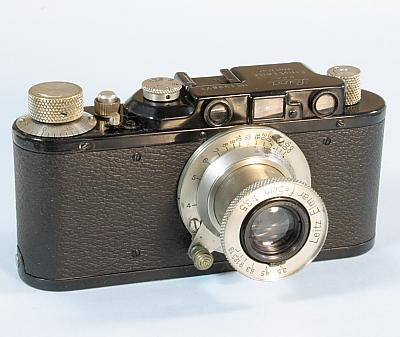





 Buy vintage Leica cameras from America's premier Leica specialist