Sunday, July 2, 2023

LEICA – MAKER OF THE FIRST EVER SLR AUTOFOCUS SYSTEM


Early autoficus test module from 1963


By Heinz Richter

Leica is often criticized for not offering autofocus for the Leica M.  Many feel that this is really the final step necessary to make the M fully competitive with the top models from other manufacturers.  However, that issue is covered by several other cameras within the Leica system.  It is doubtful that there will ever be an autofucus Leica M camera, because the heart of the M system has always been the rangefinder.

It is a actually a little known fact that Ernst Leitz Wetzlar GmbH (the name Leica Camera used to be called) was the first company to develop a working autofocus system.  Between 1960 and 1973 the company patented a number of autofocus technologies, and then showed that technology at the Photokina in 1976 and 1978 as the Leitz Correfot.  A completely operational prototype was shown to the public at the Leica Historical Society of America (LHSA) meeting in Minneapolis in Fall of 1980. 

I had the opportunity to see some of these early autofocus cameras during my recent visit to Leica in Wetzlar during a private tour of the Leica archives.


The common CdS light meter cells at that time proved to display also a sensitivity to variations in contrast.  It is a known fact that an image displays the highest contrast when in focus.  By using two CdS cells it was possible to accurately determine the highest contrast level and thus accurate focus.  The system was somewhat similar in concept to today's phase-detection systems - except that it required a vibrating diffraction grating to work accurately.

Early test module from 1963

The first completely operational test model built into the shell of a Leicaflex SL2, renamed CK1.  All sensors necessary for the automatic focusing were part of the camera.  It was designed to use the conventional Leica R lenses on the market at that time.  The system required the lenses to be focused manually with the help of focus verification via two LEDs on top of the viewfinder.  But like the camera shown at the LHSA meeting in Minneapolis, the Leicaflex SL2 was also shown with a servo motor equipped 50mm f/1.4 Summilux R which provided true autofocus operation and made electronics-aided manual focusing unnecessary.

Very early Model "Electronic Working (But not OK)"


The servo motor was connected to the lens via a gear that engaged with the ridges engraved in the focusing ring of the lens.  With other words, it actually turned the conventional focusing ring to effect automatic focusing.  Leica chose this approach at the time because they felt it was necessary to utilize their very precise focusing mounts to maintain the mechanical and optical integrity of their lenses.

At that time it was generally thought that autofocus systems suffered from low-light insensitivity.  I  was able to use the camera and I can verify that the system worked perfectly in even very low light conditions and no manual refocusing was necessary at all.  However, the camera did display one serious drawback, very high power consumption.  The prototype’s servo motor used lots of energy which was supplied by a battery pack attached to the bottom of the camera.  It was made from the housing of a Leica R3 motor drive unit.  The six batteries proved to be good for only one hour of operation.

Later 19180 test model based on a Leica R4 MOT

Careful inspection of the lens revealed meter couplings for the Leica R3 and R4 cameras.  These were utilized in a follow up model, based on the Leica R4 Mot prototype with special Correfot prism. The Leica R4 Mot prototype was replaced by the R4 Mot CK3 for which Leica also produced an auto-focus prototype lens Summilux 1.4/50mm

In 1983 Nikon presented an evolution of its flagship camera, the Nikon F3AF with its viewfinder DX1 and its two lenses, AF 80mm f2.8 and AF 200mm f3.5 ED.  Although never officially confirmed, it is generally assumed that Nikon purchased the manufacturing rights for the Correfot prism from Leitz  to develop the F3 AF. 


We must applaud Leitz’ decision not to forego their standard focusing mount for the flimsy autofocus systems that were marketed in the 80s and 90s.  Virtually without exception, those were so loose that the moving section of any of those lenses could easily be wiggled back and force by a considerable margin.  That of course is far removed from the 1/100mm (1/2500 inch) precision of the Leica focusing mounts.  Other companies chose that approach because it was the only means at the time to make the focusing parts of their lenses move easily enough to allow the use of rather small autofocus motors with low enough power consumption to make them practical with common use.

Unfortunately Leica never marketed their autofocus cameras thus missing out on having been the first company to do so.  That honor goes to Minolta, who introduced the Minolta 7000 in 1980.


At that time Leica had a technology exchange agreement with Minolta.  The Minolta 7000 would have never seen the light of day without the Leitz Correfoot technology.

Although it never made it into production, it appears that the Correfot serves its duty in the German Leopard tanks to this day.


For other articles on this blog please click on Blog Archive in the column to the right

To comment or to read comments please scroll past the ads below.


All ads present items of interest to Leica owners.

_______________________________________________________________________

EDDYCAM - the first and only ergonomic elk-skin camera strap     
 www.eddycam.com        


Click on image to enlarge
Please make payment via PayPal to GMP Photography

Click on image to enlarge
Please make payment via PayPal to GMP Photography

Click on image to enlarge
Please make payment via PayPal to GMP Photography


Saturday, July 1, 2023

A HIDDEN GEM IN THE LEICA LENS LINEUP


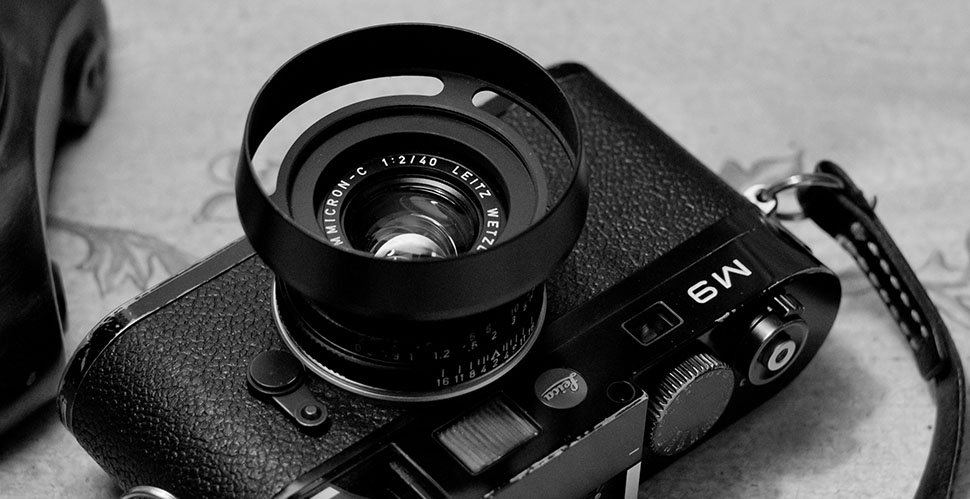
The 40mm Summicron-C f/2.0 on the Leica M9. © Thorsten Overgaard.
The 40mm Summicron-C f/2.0 on the Leica M9. 
© Thorsten Overgaard.
                       
Leica 40mm Summicron-C f/2.0


Between 1973 and 1979, Leica Camera AG produced 54,000 lenses of the Leica 40mm Summicron-C f/2.0 (order no 11542), made for the Leica CL (also known as the "Leica Mini M") film camera they developed with Minolta. It's lens it's easy to get around, and it's not expensive.

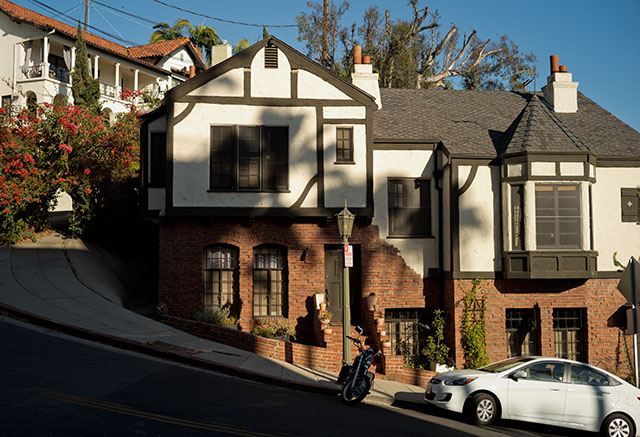
Los Angeles. Leica M10 with 40mm Summicron-C f/2.0. © Thorsten Overgaard.  
 Los Angeles. Leica M10 with 40mm Summicron-C f/2.0. 
© Thorsten Overgaard.

The Minolta CLE and the Leica CL were sister cameras in an age where Leica tried to catch up with the Japanese camera producers of the so popular SLR cameras. The idea was to work with Minolta. A lot of Minolta staff went to Leica in Wetzlar to learn the German way of engineering and assembling, which obviously took quite some resources.

The Leica CL 35mm film camera was made as Leica CL and Minolta CLE and shared technology. It also introduced three CL lenses together with it, as a compact and economical alternative to the Leica M camera. See more on the original Leica CL here. 
 The Leica CL 35mm film camera was made as Leica CL and Minolta CLE and shared technology. It also introduced three CL lenses together with it, as a compact and economical alternative to the Leica M camera.

Despite the success of the Leica CL and the Minolta CLE, the innovative cameras didn't save Leica. In early 1980's the Leitz family had to sell the Leica company. But that's another story for another day.

What we are left with is the hidden gem of the Leica lens lineup, the Leica 40mm Summicron-M f/2.0 that sells second-hand on eBay and elsewhere for around $350 - $600.

Joy Villa for 90th Oscars. Leica M10 with Leica 40mm Summicron-C f/2.0. © Thorsten Overgaard. 
 Joy Villa for 90th Oscars. Leica M10 with Leica 40mm Summicron-C f/2.0. 
© Thorsten Overgaard.

Should I buy the 40mm Summicron-C..?

If you are looking for something to tweak things a bit, the 40mm Summicron-M f/2.0 offers the usual high lens quality, the look of the 1970's and a very compact lens. So if you lust for something different, this is the one to throw your love at. It fits straight onto the Leica M.

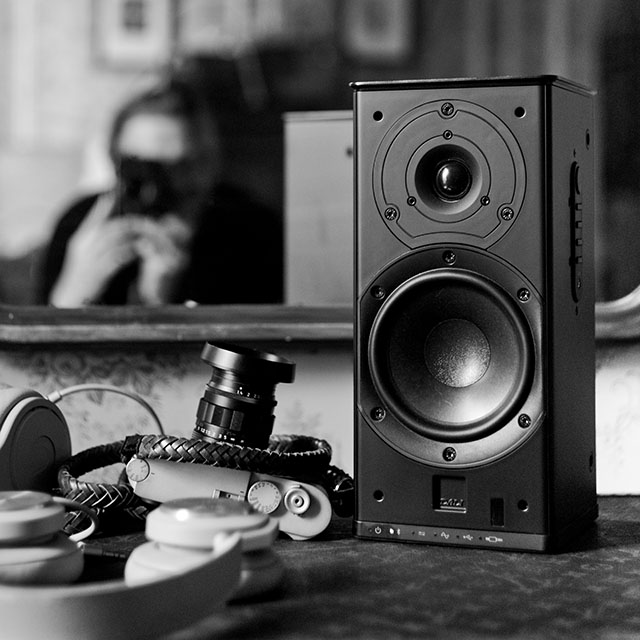
 Leica M9 with Leica 40mm Summicron-C f/2.0. © Thorsten Overgaard.
Leica M9 with Leica 40mm Summicron-C f/2.0. 
© Thorsten Overgaard.

Imagine the framelines

As the Leica M only have 35mm framelines and 50mm framelines, and never had 40mm framelines you have to imagine or approximate where the frame is. If you use an EVF (electronic viewfinder), you see the frame exactly..

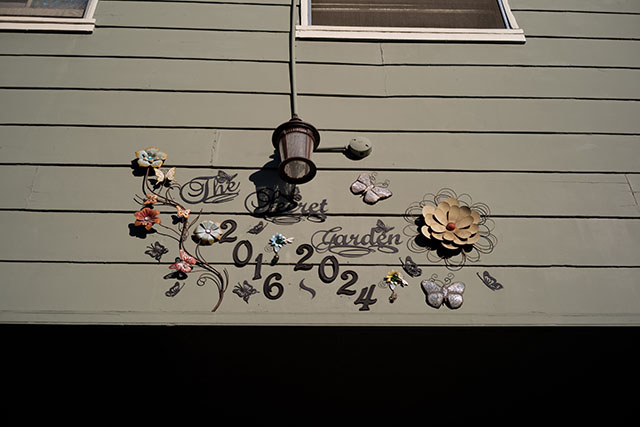
 Raven and David Campbebll. Leica M9 with Leica 40mm Summicron-C f/2.0. © Thorsten Overgaard.
Raven and David Campbebll. Leica M9 with Leica 40mm Summicron-C f/2.0. 
© Thorsten Overgaard.

The look of the 1970's

The Leica 40mm Summicron-C f/2.0 is pretty detailed and with very good control of light, colors and contrast. What you see, compared with for example the current Leica 35mm Summilux-M f/1.4 FLE (which is a $5,500 lens), is that newer Leica designs tend to be able to pick up more details in the shades.

For me, the Leica 40mm Summicron-M f/2.0 represents a somewhat 'film look' because it doesn't have the crisp high-contrast details as modern lenses have.

 
Leica M10 with Leica 40mm Summicron-C f/2.0. 
© Thorsten Overgaard.

Close focus

A feature of the Leica 40mm Summicron-C is that you can close focus as near as 80 cm. If you pick a long background with some sparkling light, you will get some nice sparkles.

Leica M10 with Leica 40mm Summicron-C f/2.0. © Thorsten Overgaard.   
Leica M10 with Leica 40mm Summicron-C f/2.0. 
© Thorsten Overgaard. 

Compact lens

With just 120g and a length of 23mm (1 inch), this is as compact as it gets for street photography and travel.

Designers

Optical designers of the 40mm Summicron-C is Georg Knetsch, Hermann Desch (also 21mm and 28mm Elmarit), Heinz Marquardt (also 60mm Macro-Elmarit-F, 28mm Elmarit-M and 50mm Summilux-R), and Walter Watz (also 35mm Summilux-M and 35mm Summilux-M Aspherical AA).

 
Leica M10 with Leica 40mm Summicron-C f/2.0. 
© Thorsten Overgaard.

Leica M9 with Leica 40mm Summicron-C f/2.0. 
© Thorsten Overgaard.

Lens shade

           
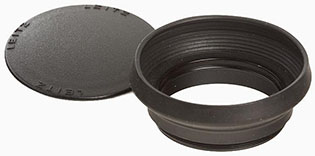
The original rubber hood (order no 12.518)
             
The Leica 50mm Summicron-M f/2.0 comes with an original rubber hood (order no 12.518), which was a popular hood back in the 1980's. The original rubber hood is not worth pursuing as the rubber will be pretty old looking. I prefer mine to look a little more sophisticated, so I fitted the E39 Ventilated Shade that I designed myself for Leica lenses.

Leica 40mm Summicron-C f/2.0 with the E39 Ventilated Shade designed by Thorsten Overgaard.
Leica 40mm Summicron-C f/2.0 with the E39 Ventilated Shade designed by Thorsten Overgaard.  


Thorsten von Overgaard is an award- winning Danish writer and photographer, specializing in portrait photography and documentary photography, known for writings about photography and as an educator.  
Thorsten von Overgaard is an award- winning Danish writer and photographer, specializing in portrait photography and documentary photography, known for writings about photography and as an educator.

For more information go here


For other articles on this blog please click on Blog Archive in the column to the right

To comment or to read comments please scroll past the ads below.


All ads present items of interest to Leica owners.

_______________________________________________________________________

EDDYCAM - the first and only ergonomic elk-skin camera strap     
 www.eddycam.com        


Click on image to enlarge
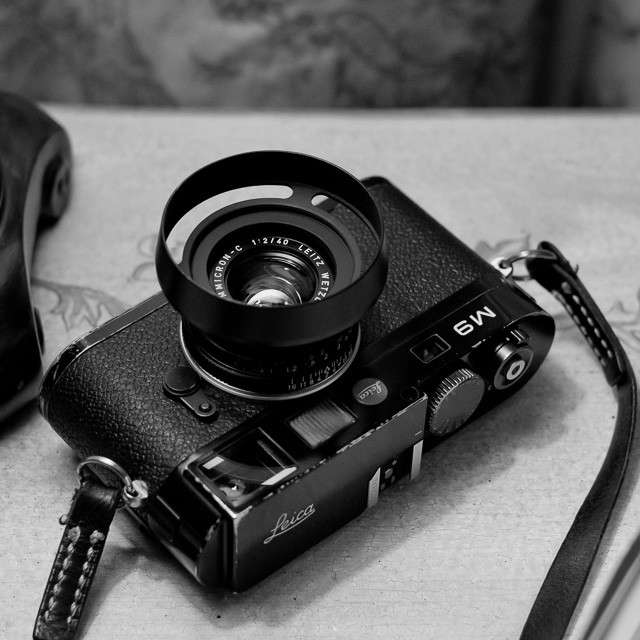
Please make payment via PayPal to GMP Photography

Click on image to enlarge
Please make payment via PayPal to GMP Photography

Click on image to enlarge
Please make payment via PayPal to GMP Photography