Wednesday, January 2, 2013

AKTFOTOGRAF GÜNTER RÖSSLER IST TOT


Im Westen galt er als "Helmut Newton der DDR", Günter Rössler selbst mochte diesen Titel nicht. Er zeigte die Frauen gern versonnen und selbstbewusst zugleich, in eher zarter Schwarzweiß-Ästhetik. Nun ist der berühmte Aktfotograf im Alter von 86 Jahren gestorben.

Günter Rössler im Dezember 2005 in seinem Atelier in Markkleeberg bei Leipzig.
Günter Rössler im Dezember 2005 in seinem
Atelier in Markkleeberg bei Leipzig.


Günter Rössler hat mit einer Vielfalt vom Kameras gearbeitet unter denen auch auch etliche Modelle der Leica vertreten waren.

Zu Ruhm kam er mit seinen Bildern in dem Modemagazin "Sibylle" und dem "Magazin", einer Zeitschrift, die jeden Monat ein Aktfoto brachte - meistens von Günter Rössler fotografiert. Nun ist der Pionier der Aktfotografie in der DDR im Alter von 86 Jahren am Silvestertag in einem Leipziger Krankenhaus gestorben, wie der Berliner Jaron Verlag am Mittwoch mitteilte. Er erlitt einen Herzstillstand.

Rössler-Akt "Renate, 1969": In der DDR erschienen seine Aktfotos in der...
"Renate, 1969": 

Rössler war zudem Hausfotograf der DDR-Modezeitschrift "Modische Maschen", die viermal im Jahr mit Modefotos und den dazugehörigen Strickanleitungen erschien und in der DDR extrem beliebt war. 1984 brachte dann sogar die deutsche Ausgabe des "Playboy" eine zehnseitige Bildstrecke von Rössler-Akten. Titel: "Mädchen der DDR". Das "Playboy"-Konzept des girl from next door war für den Fotografen dabei kein Kunstgriff, sondern Resultat seiner alltäglichen Arbeitsroutine: Weil das Modellstehen im ostdeutschen Realsozialismus nicht besonders gut bezahlt wurde, waren Rösslers Modelle keine Profis.

"Heidrun, 1977": Der Fotograf Günter Rössler starb am 31. Dezember 2012 mit 86...
"Heidrun, 1977": 

Versonnen statt mit Schmollmund

Nach der Wiedervereinigung sank der Stern Rösslers zunächst. "Günter, wir brauchen dich nicht mehr", teilte man ihm bei den "Modischen Maschen" mit. Die Zeitschrift wurde nach mehreren Fusionen und Umbenennungen 1993 eingestellt, das Ende von "Sibylle" folgte 1995. Auch beim "Playboy" hatte man nach der Wende wenig Interesse an der zarten Schwarzweiß-Ästhetik Rösslers, der seine Modelle eher versonnen und selbstbewusst zeigte als mit kokettem Schmollmund oder in ähnlich aufreizenden Posen.

"Jutta, 1974": Anders als Helmut Newton, mit dem man ihn oft verglichen hat,...
"Jutta, 1974": 

In den vergangenen Jahren wuchs das Interesse an Rössler und seinem Werk jedoch wieder. 2005 kam unter dem Titel "Mein Leben in vielen Akten" eine bildreiche Autobiografie heraus, 2010 folgte die umfassende Werkschau "Akte 1953-2010". Im September 2012 erschien der Bildband "Starke Frauen im Osten". Und im Dezember 2012 schließlich kam mit "Die Genialität des Augenblicks" von Fred R. Willitzkat ein Dokumentarfilm in die Programmkinos und auf DVD heraus, der den 1926 geborenen Aktfotografen porträtiert.

"Stefanie, 1997": Obwohl das Interesse nach der Wiedervereinigung stark abnahm,...
"Stefanie, 1997": 

Dass man ihn im Westen als "Helmut Newton des Ostens" zu titulieren pflegte, gefiel Rössler übrigens wenig. "Bei Newton dominiert die Pose, bei mir geht es um die höchstmögliche Authentizität der Mädchen", erklärte der Fotograf anlässlich seines 85. Geburtstags der "Bild"-Zeitung.


LEICA AKADEMIE IN ATLANTA, GA


The Leica Akademie Monochrom workshop will make a stop in Atlanta, GA on January 19th, 2013.

Many of the world’s most memorable images were shot in black and white, and as any experienced black-and-white shooter can attest, there is still something unique, compelling, and beautiful about this traditional medium.

This one-of-a-kind workshop will let you explore this fascinating monochromatic world using the unique M Monochrom camera. This program combines a class lecture with real world shooting experience. Under the guidance of a seasoned Leica Akademie instructor you’ll gain a more profound understanding of the nuance of the M Monochrom and its ability to capture light, texture, contrast, and tonal gradation.  This workshop will focus on capturing images and getting the most out of the unique sensor used in the M Monochrom.

Topics covered include:

•Pros and Cons of shooting M Monochrom vs. M9 and converting.
•Test Shoot with the M Monochrom.
•Maximizing capture from the M Monochrom, resolution and tonal range.
•What makes a good B&W image?
•Developing a new way of seeing.

Who should attend this Workshop?

If you’ve always wanted to discover the amazing world of light and shadow and all the grays in between and walk away with a clear understanding of the M Monochrom, this is the workshop for you.

For more information and to register, go to: http://bit.ly/134cKGh


LEICA ON YOUTUBE


In a special program, titled “Made In Germany,” Deutsche Welle showed a short documentary about the Leica.  It shows how the Leica myth has been renewed after a long financial crisis and it has taken a step into a new era with Andreas Kaufmann.


Deutsche Welle said: A Leica is forever.  That motto was the brand’s selling point – and very nearly its downfall.  After failing to keep pace with the digital revolution, in 2004 the German company almost went bankrupt.  Then investor Andreas Kaufmann stepped in, and brought Leica back from the brink.  Since then, Leica has invested 80 million euros in research and development, and in 2009, Leica achieved profitability once again.


The video, including a second Deutsche Welle production about the Leica can also be seen on the L-Camera Blog at:


Monday, December 31, 2012

FROHES NEUES JAHR - HAPPY NEW YEAR


Das LEICA Barnack Berek Blog team wünscht allen Leserinnen und Lesern ein gesundes, glückliches und erfolgreiches neues Jahr, zwölf gesunde Monate, 52 schöne Wochen, 365 tolle Tage, 8760 angenehme Stunden und 525.600 glückliche Minuten. Happy New Year!

The LEICA Barnack Berek blog team wishes all our readers a very happy and prosperous new year, twelve healthy months, 52 beautiful weeks, 365 great days, 8760 pleasant hours and 525,600 happy minutes.  Happy New Year


Wednesday, December 26, 2012

LEICA NOW OFFERING 6-BIT CODING FOR APO-TELYT-M 135mm f/3.4 ASPH


Up until now, the 6-bit coding has not been available for the Leica APO-Telyt-M 135mm f/3.4 ASPH.  All previously sold lenses were delivered without this coding and there was no option to have this done at a later date.  However, Leica just announced that this is finally available after January 15, 2013.

If the lens was purchased AFTER September 1, 2006, Leica will charge $200 for the coding. If the lens was purchased BEFORE September 1, 2006 the cost of coding will be $300. Any lens purchased after September 1, 2012 will be coded free of charge.


In addition to the 6-bit coding, Leica is also offering the ability to purchase an 18 month certified pre-owned warranty for $50. The certification is valid for 18 months from the time of conversion and includes all lens functions tested on factory equipment and complete cleaning of the external surfaces of the lens.

According to Leica, the 6-bit coding has the following advantages:

All Leica M-lenses leaving the factory are equipped with a code on the bayonet ring which enables the digital Leica M camera to recognise the lens type. The information on the lens that is being used helps the camera to optimise image quality. Lenses in the current range as well as many earlier models can be retrofitted (at the cost of the owner) to benefit from the image optimisation in the camera. The lenses are compatible with the digital M camera even without retrofitting, except that the additional features cannot be used.

The lens coding is called ‘6-bit coding‘ because six fields in the bayonet ring are marked in black or white to represent a number from 1 to 64 in binary code. The digital M camera reads this information optically and can identify the lens on the basis of this code. Apart from the improvement in image quality, this information is also written into the EXIF image file.

Many of the lenses made from 1963 onwards can be converted. A list of such models is available in the PDF document "M Lens Coding List". Please ask either your authorised Leica dealer or Customer Care in Solms to perform the update. The latter will be happy to inform you on this subject. Customer Care is available at the phone number +49 (0)6442 208-189. 


Monday, December 24, 2012

HAPPY HOLIDAYS


Happy Holidays and a wonderful new year from all of us here at the LEICA Barnack Berek Blog.


Tuesday, December 18, 2012

LEICA NEWS


Dear Friends of Leica,

We hope you find the latest news, including about some novel developments in the world of Leica, both informative and interesting.

Your Leica Camera Team. 

Anniversary Book: Ninety Nine Years Leica
A company history, yet completely different.

00_banner.jpg

The book is neither a corporate chronology nor an album; it provides no technical details, instructions nor many figures. In fact, it directs an emotional spotlight on 99 years of passion and enthusiasm for a small camera developed by Oskar Barnack. The book is not a tribute to the perfection of a product, but to the intensely emotive and legendary images that have been a part of our lives for almost a century.

Legendary cameras, inventors and innovators, great photographers and collages tell of Leica and its undying passion for technical innovation and the art of capturing life and the world around us in pictures.

Available from Leica Stores, Leica Boutiques and selected Leica Dealers.

Leica Wall Calendars
Two new Leica wall calendars for 2013

banner_calender_00.jpg

Leica S Calendar

Images captured by the British portrait and fashion photographer Rankin.

 photographer Rankin.

Cover_Leica_S_Calendar_2013.jpg

This calendar presents 12 images from various sessions captured by the British photographer Rankin with the new Leica S. Hair is the core theme of all these images, and for this project, the Londoner worked in collaboration with prominent stylists.


Leica M Monochrom Calendar

Stars of the international music scene at the Montreux Jazz Festival 2012.

Cover_Leica_Monochrom_Calendar_2013.jpg


Among others the images show Erykah Badu, Alanis Morissette, Kimbra, Sebastien Tellier, Hugh Laurie, Buddy Guy, James Carter and Katie Melua. Photographer Michael Agel documented the festivals unique atmosphere with the Leica M Monochrom and dramatically depicted the artists shown in the calendar.


Leica Oskar Barnack Award


Invitation to submit entries for the 2013.


OBA_NL_EN.jpg


Leica Camera once again invites professional photographers to submit entries to their international photography competition, the Leica Oskar Barnack Award.

Photographers wishing to take part may submit their photographic projects online between 15 January and 1 March 2013. The terms and conditions of entry can be downloaded from www.leica-oskar-barnack-award.com shortly before the start of the competition.

The winner of the 2013 Leica Oskar Barnack Award will receive a Leica M camera with lens worth approximately 10,000 in addition to a cash prize of 5,000.

The Leica Oskar Barnack Newcomer Award, for (prospective) professional photographers aged 25 and under will also be presented.


Monday, December 10, 2012

LEICA TEST CAMERA – ANOTHER LEICA FEW HAVE EVER SEEN


Over the years, Leica has made a number of specially modified cameras for testing purposes.  These cameras do present an exclusive range of extremely rare cameras, many of which are unknown to the general public.

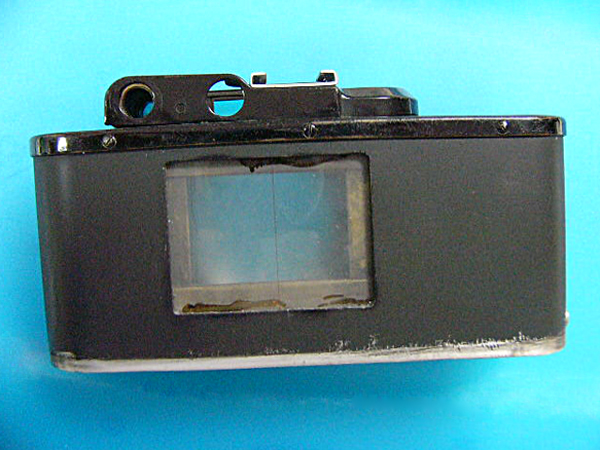
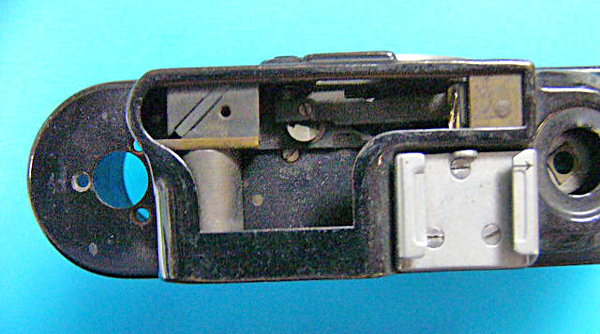
I just obtained some pictures of one of these Leica test cameras.  This one was specially modified by Leitz to check focus at the film plane and to show the internal workings of the rangefinder.  The camera does not show any specific engravings, but it has a special serial number engraved to designate it as a special test model.

If any reader of this blog has any information about other modified test cameras, I would very much appreciate hearing about it.

Test camera showing specially installed ground glass to check focus at the film plane
Photo courtesy of Don Goldberg

The same camera with a cut-out to reveal the rangefinder
Photo courtesy of Don Goldberg

The specially engraved serial number
Photo courtesy of Don Goldberg

Don Goldberg is the owner of this camera.  He is interested in selling it.  You can reach Don at:


DAG Camera Service
2128 Vintage Drive
Oregon WI 53575 USA
608 875 3342
http://www.dagcamera.com/


Wednesday, December 5, 2012

LHSA NEWS

 
selected

2013 FLORIDA SPRING SHOOT!

  Make plans now to join the LHSA in sunny south Florida for the 2013 Spring Shoot!  The event dates are Wednesday, April 17-Saturday, April 20.  Plans are underway for several days of shooting and other activities in various locations throughout south Florida.   

  Room reservations are available at the charming Riverside Hotel in Ft. Lauderdale. www.riversidehotel.com  The Riverside Hotel is conveniently located in the famous entertainment district on Las Olas Boulevard, just four miles from the Ft. Lauderdale/Hollywood International Airport and two miles from the area's pristine beaches.  

  Call 1-800-325-3280 and ask for reservations in the "Leica" group.  Rates are $169 for a Classic Standard room and $185 for rooms in the Executive Tower.  The special rates are available April 13-23 for those members interested in a longer stay.

  Registration packets will be available in early February, with a registration deadline of March 15.  Please watch this page for updates.


selected

45TH ANNUAL MEETING - SAN FRANCISCO!

The LHSA Meetings Committee is pleased to announce plans for the 45th Annual Meeting, to be held in beautiful San Francisco October 30-November 2, 2013! 

The headquarters hotel will be the Marines Memorial Club near Union Square (www.marineclub.com).

Room reservations will be available in January.  Please watch for updates.


Tuesday, December 4, 2012

M2-250 - A LEICA FEW HAVE EVER SEEN


Recently I sold a few Leica items on eBay.  One of the buyers struck my interest with his eBay screen name of Schmirgelpapier.  Taking a closer look revealed that it was Don Goldberg of DAG Camera Repair, one of the best Leica repair technicians in the country.  I hadn’t talked to Don for a while and it was nice to catch up.  Needless to say, we also talked about the LEICA Barnack Berek Blog.  I asked him if he would be willing to contribute some of his wisdom to the blog, only to be totally surprised by his answer.

One of the items he was interested to talk about was a Leica M2-250, an off the shelf camera that his father Norman Goldberg had converted in the 1960s to accept film for 250 exposures.  I had never heard of this camera and I was eager to learn more about it.

Norman Goldberg was born in Chicago in 1931 and, after serving a five-year apprenticeship in camera repair and attending the Illinois Institute of Technology, he moved to Wisconsin in 1951. There he established Camcraft, an independent workshop which specialized in repairs and custom modifications to professional photographic equipment. In 1966 he became a technical consultant to Popular Photography, devising a lens testing program for them and creating their testing laboratory, and in 1972 he joined the staff of the magazine. He retired in 1987 after working for Popular Photography for 22 years.

While running Camcraft, he became the first Leica authorized service facility for Leica cameras in the US.  He also published a book about camera technology in 1992, titled “The Dark Side of the Lens.

Goldberg is perhaps best known as the creator of the Camcraft N-5 electric motor drive for the Leica M2 and MP. However, he has also several other inventions for Leicas and other cameras to his credit.  For instance, the clip he designed to permit wearing an M Leica on the belt was widely used, and he also offered modifications of the Visoflex, utilizing either a prism or a pellicle mirror.  He also designed and built a considerable amount of testing equipment to test cameras and lenses, including the equipment used at Popular Photography, and he held numerous patents.


Camcraft N-5 motor with power supply

Camcraft N-5 motor attached to Leica M2

The first camcraft N-5 motor was introduced in 1961.  After several modifications to the original design, the final version was made by TPI (Technical Photomation Instruments) of Los Angeles.  Eventually Leitz bought the patents and the rights to the motor.  Over the years they made over a thousand units of what was often called the NY Motor.  It was sold for the M2-M and later for the M4-M.

With the motor in place, 36 exposures could go very fast, and the need to change to a new roll of film was ever present.  This lead to thoughts of a larger capacity of film and Goldberg began to design a 250 exposure conversion of a Leica M2 which incorporated the successful N-5 motor.  The modifications are based on a standard Leicavit rapid advance.  They included larger film compartments at both the supply and take up side of the camera which were attached to the camera and the Leicavit.  The manual film advance of the Leicavit was replaced by the N-5 motor.  Power was supplied via a cord, connected to a separate power supply which contained the batteries.  Only one of the M2-250 cameras is in existence, making it also one of the rarest Leicas.


M2-250 original design sketch by Norman Goldberg

Far from walking in the shadow of his father, Don Goldberg is very accomplished in the Leica community himself.  In 1970 he worked at Leitz Wetzlar for two years.  There he received the skills of a Feinmechaniker (Precision Mechanic) a prerequisite for Leica technicians.  With the town of Giessen close by, he also decided to learn about Minox cameras at the Minox plant there.  He worked for Minox for three months and then took a position at the Leica Service department in New Jersey.  In 1980 Don established his own camera service business, DAG which he still runs today.


Don is interested in determining what the M2-250 might be worth and he might consider selling it.  Anyone interested can contact Don directly at:

DAG Camera Service
2128 Vintage Drive
Oregon WI 53575 USA
608-835-3342
http://www.dagcamera.com/


Monday, November 26, 2012

THE MOST VALUABLE CAMERA IN HISTORY


The old saying goes that a picture is worth a thousand words, but does that make a camera worth over 2 million bucks? It does for this one, the favorite camera of LIFE magazine photographer David Douglas Duncan, known for his war photographs and intimate images of his friend Pablo Picasso. The Associated Press reports today that Austria's WestLicht gallery announced that a Leica M3D, which the gallery says belonged to Duncan, sold for $2.19 million over the weekend, setting the record price for a "commercially produced camera." 
Suzy Banks, writing at the Harry Ransom Center at the University of Texas at Austin, which has Duncan's archive, explained: 
By the time Duncan began photographing the war in Vietnam, he was shooting with Leica M3Ds (D for Duncan), which the company manufactured and designed especially for him, limiting production to four. The battle-hardened camera, curiously enough, also proved ideally suited for one of Duncan's subsequent and more intimate topics: Pablo Picasso and his family. With its soft-click shutter, this camera helped the photographer document the artist's private moments as unobtrusively as possible.
Here are some of Duncan's more iconic images from Vietnam...


...and of Picasso


The Above article was written by Esther Zuckerman and published in the Atlantic Wire

While it's claim of this being the most valuable commercially produced camera in history is correct, the most valuable camera in history is also a Leica.  That title goes to one of the original pre-production Leicas, the so-called 0-Serie, which was sold for $2.79 million, also by WestLicht.

See:
NEW WORLD RECORD FOR MOST EXPENSIVE LEICA CAMERA


Wednesday, November 14, 2012

A PERSONAL MATTER


If it appears that there have been no new posts from me for a few days, you are correct.  I just went through knee replacement surgery and have not recovered enough to work effectively on new posts.  But i will be back, with new and hopefully exciting news and articles.  Just a hint, I have heard of a 250 exposure M Leica and am working right now to obtain information and pictures.  Stay tuned...please.

Tuesday, November 6, 2012

IS THIS A "LEICA" BEFORE THE UR-LEICA?


A Leica enthusiast sent me four photographs that appear to have a close resemblance to early Leica cameras.  But there are no visible engravings and the pictures were not accompanied by any explanations.  To the contrary, the sender was wondering what we are looking at.

My first thought was that it might be the exposure testing camera that Barnack built prior to the UR-Leica, the camera that recreated his interest in a camera that takes small negatives.

One thing that points strongly in that direction is the fact that this camera has no apparent means to change exposure times, something that was unnecessary with motion picture cameras since they had a fixed exposure time of 1/40 second. 

On the other hand, looking at the back of this camera, it appears to have a rectangular image size extending along the length of the film.  As a matter of fact, the entire camera appears to be laid out like the UR-Leica, which already covered the standard 24 x 36 mm frame size.


Rear view of the camera.

We do know that Barnack experimented with several lenses in order to find one that adequately covered the negative and one that could do so with adequate sharpness.  This camera obviously has a very crude, but quick way to attach a lens.  The round opening visible next to the leans mounting tube seems to be in a dark slide which apparently could protect the film from being exposed when another lens was attached.

After inspecting the pictures and after giving this matter some thought, I tend to look at this as a crude testing device for a variety of lenses rather than Barnack’s exposure testing camera.  Nothing that I have ever read has given even the slightest hint that this was the case.  I am simply applying some logic, and that does point in a direction other than the exposure testing camera because there was no reason to design that with a negative size larger than18 x 24 mm.  There was also no reason to run the film horizontally as is obviously the case here.

Even though there is no information available on this camera, I am rather certain that we are looking at a Barnack design.  There are too many design similarities to dismiss it as something made by someone else.  The screws holding the top cover and the apparently removable bottom plate are classic Barnack.  In addition, the large screws protruding from the top plate on the right and left side of the camera are very much the same as similar screws visible on the Ur-Leica.

Bottom plate with locking dial

Lens mounting tube and dark slide

Ur-Leica.  Please note the large srews on the left and right on the top plate, 
very similar to those on the unknown camera.


If anyone has any other information or thoughts on this, I would greatly appreciate hearing about it.

Addendum 12-26-2012:

Since I wrote the article, I have been able to verify that this camera is indeed a Leica product.  One reader even sent me a picture which shows it on display at the Leica Museum in Solms.  It must be a new addition because on my past visits to Leica I have never seen it.  I am planning to be in Solms in a few months.  At that time I will make sure to obtain as much additional information as possible and then pass it on here.


Friday, November 2, 2012

A MESSAGE FROM LEICA CAMERA


  • To all of our USA customers, we are aware that some of you are worried about your orders and repairs at the Leica Camera USA offices located in New Jersey. The office was affected by Hurricane Sandy and doesn't have phone or email access; however, there is a team at the warehouse making sure all packages are received and properly processed. If you have any questions, the best way to reach us is by messaging us on Facebook. We feel very fortunate that everyone is in good health and appreciate your patience while we get the office back online and fully operational.


Thursday, November 1, 2012

FINE ART NUDE PHOTOGRAPHY – GALLERY 2


The most widely read article of this blog is “Fine art Nude Photography” from March 19, 2012.  Considering its popularity, I decided to expand on the theme by publishing a second gallery.  As I mentioned before, historically, the human form has fascinated artists probably more than any other subject. Therefore it should come as no surprise that the same fascination has extended to photography as well.

Many of the great photographers have produced fine art nudes like Alfred Stieglitz, Edward Steichen, Edward Weston, Man Ray, Helmut Newton…, just to mention a few.

When it comes to fine art nude photography, it is quite easy to take a photograph of a person without any clothes.  That, however, is not art and should not be attempted to be presented as such.  Instead the emphasis should not be so much on nudity but on shape, form, lighting, design and composition.  It is my hope that today’s gallery meets those criteria.


Marlies Amling

Marlies Amling

Marlies Amling

Marlies Amling

Marlies Amling

Marlies Amling

Heinz Richter

Heinz Richter

Heinz Richter

Heinz Richter

Heinz Richter

Blaine Schultz


For more on the same theme go to:

FINE ART NUDE PHOTOGRAPHY

FINE ART NUDES – A DIFFERENT APPROACH

PHOTOSHOP ART